
Our cosmic neighbourhood
Solar System
Explore the Sun, planets, moons and smaller bodies close to home.
Our solar system consists of the Sun, eight planets, numerous moons, dwarf planets, asteroids and comets. Here you’ll learn how these celestial bodies are structured, where you can find them in the night sky and what to keep in mind when observing them.
Planets in the Solar System
The eight planets in our solar system differ greatly in size, composition and distance from the Sun. From the rocky inner planets to the gas and ice giants, there is a great deal to discover.
Mercury
Mercury is the closest planet to the Sun and also the smallest planet in our solar system. Its surface is heavily cratered and in many ways resembles our Moon. Because of its proximity to the Sun, Mercury is best observed shortly before sunrise or shortly after sunset.
Venus
Venus is the brightest natural object in the sky after the Sun and the Moon. It is surrounded by a dense atmosphere made mainly of carbon dioxide, creating extremely high surface temperatures. From Earth, Venus is especially easy to observe as the “Morning Star” or “Evening Star.”
Earth
Earth is the third planet from the Sun and the only known world with liquid water on its surface and life. Its Moon influences the tides and is also the most prominent object in the night sky after the Sun.
Mars
Mars is known as the “Red Planet” and is one of the most fascinating objects to observe in the night sky. Its reddish color is caused by iron oxides in the surface material. Particularly interesting features include its polar caps, dark surface markings and the large changes in its apparent size around opposition.
Jupiter
Jupiter is the largest planet in our solar system and is impressive even through a small telescope, with its cloud bands and the Great Red Spot. Its four large Galilean moons — Io, Europa, Ganymede and Callisto — are especially fascinating, and their positions visibly change from night to night.
Saturn
Saturn is best known for its spectacular ring system and is one of the most impressive planets to observe through a telescope. The rings are made up of countless particles of ice and rock. Several of Saturn’s moons, including Titan, are also particularly interesting observing targets.
Uranus
Uranus is an ice giant known for its blue-green color, caused by methane in its atmosphere. One of its most unusual features is its extreme axial tilt, which means the planet effectively orbits the Sun on its side. Uranus is difficult to see with the naked eye, but it can be found with binoculars or a telescope.
Neptune
Neptune is the outermost of the eight planets and an ice giant. Its atmosphere has exceptionally fast winds. In a more natural colour representation it appears pale blue-green; the intense blue in many familiar images was enhanced to reveal atmospheric detail. Neptune is not visible to the unaided eye. Suitable binoculars or a telescope and an up-to-date star chart can help you locate it; resolving its tiny disc requires sufficient magnification and favourable conditions.
Dwarf Planets and Other Celestial Bodies
In addition to the eight planets, our solar system also contains dwarf planets, asteroids, comets and many other small celestial bodies. They provide important clues about the formation and evolution of the solar system and can also be fascinating targets for observation and research.
Pluto
Pluto is one of the best-known dwarf planets in our solar system. It orbits the Sun in the Kuiper Belt beyond Neptune and has several moons, including the comparatively large Charon. Thanks to missions such as New Horizons, we now know that Pluto has a surprisingly diverse surface.
Asteroids
Asteroids are mainly rocky or metallic celestial bodies found primarily in the asteroid belt between Mars and Jupiter. They range in size from small fragments to objects several hundred kilometers across and are considered remnants from the early history of the solar system.
Comets
Comets are made mainly of ice, dust and rock. As they approach the Sun, their surfaces warm up, creating a glowing coma and sometimes one or more tails. Particularly bright comets can become some of the most spectacular sights in the night sky.
Moons
Moons are natural satellites of planets and dwarf planets. They vary greatly in size, composition and surface features. Well-known examples include Earth’s Moon, the Galilean moons of Jupiter and Titan around Saturn. Many moons are fascinating observing targets in their own right and play an important role in understanding our solar system.
Observing Tips for the Solar System
Many objects in our solar system can already be observed with the naked eye, binoculars or a small telescope. Bright planets, the Moon and striking planetary alignments are especially rewarding targets. Good viewing conditions, a dark observing site and a little patience often make the biggest difference.
More About Our Solar System
On Foto-Gorilla, you’ll gradually find detailed information about the individual planets, moons and other celestial bodies in our solar system. The focus is not only on their structure and special features, but also on important observing data: How far is an object from the Sun and from Earth? How hot or cold is its surface or atmosphere? How long does it take to orbit the Sun or – in the case of moons – its planet? And when is it especially well placed for observation from Earth?
Distance plays a major role in observation. Depending on their position in orbit, planets can appear noticeably brighter or larger. Mars, for example, changes considerably in apparent size, while Jupiter and Saturn remain prominent observing targets over longer periods. Venus and Mercury, by contrast, are often visible only in the morning or evening twilight because of their proximity to the Sun.
Temperatures and day lengths also vary enormously. Mercury experiences extreme differences between day and night, while Venus has a dense atmosphere and very high surface temperatures. The outer planets are much colder and consist largely of gases and ices. Moons can have very different orbital periods and can produce fascinating events such as shadows, occultations and transits across their planets.
These kinds of data not only help explain how our solar system is structured – they are also useful when planning an observing session. Depending on the season, time of night and observing location, visibility, altitude above the horizon and observing conditions can change significantly. Step by step, Foto-Gorilla will make these connections clear and practical for observers.
Continue with celestial events in the Solar System and learn how to plan an observing session.
Our neighbourhood: exploring the Solar System yourself
The Sun, Moon and planets change position against the background stars. Check when your target is above the horizon and how high it will be at your observing time. For bright planets, a clear view and steady air are often more important than exceptionally dark skies.
What different instruments reveal
Your eyes can locate bright planets and follow their movement over several weeks. Binoculars reveal lunar features and, in suitable conditions, Jupiter’s large moons. A suitable conventional telescope can show Saturn’s rings or Jupiter’s cloud bands. The detail you see depends on aperture, magnification, target altitude and atmospheric turbulence.
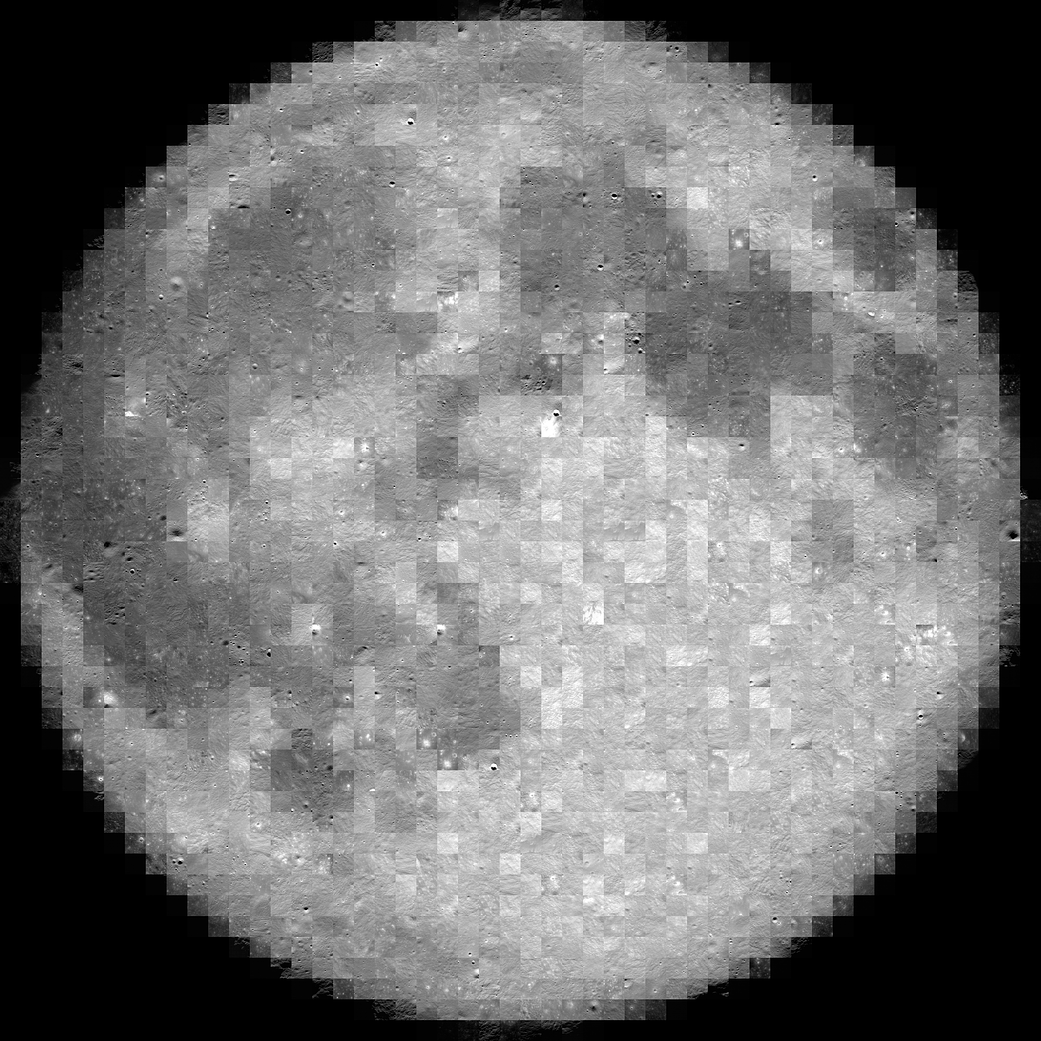
The Moon with a smart telescope
Many smart telescopes provide a lunar imaging mode. Craters and mountains show strong contrast near the terminator, the boundary between light and shadow. These shadows are much less pronounced at full Moon. Fine planetary detail requires appropriate focal length, resolution and imaging technique: a smart telescope designed for deep-sky imaging is not automatically a specialist instrument for Jupiter or Saturn.
Understanding distances and periods
A planet’s distance from Earth changes as both bodies orbit the Sun. Apparent size and brightness change too. Distinguish distance from the Sun from current distance from Earth, and orbital period from rotation period.
Observing the Sun safely
Never point binoculars, a telescope or a smart telescope at the Sun without suitable protection. Use only an undamaged solar filter appropriate for your instrument, following the manufacturer’s instructions. Sunglasses or eclipse glasses behind an optical instrument do not provide sufficient protection.
Explore celestial events, the observing guide and imaging equipment. See also NASA’s Solar System overview.
Exploring the planetary topics
Taking a closer look at our neighbourhood.
Mercury and Venus: twilight targets
Both planets orbit inside Earth’s orbit, so from our perspective they never appear arbitrarily far from the Sun. You need a suitable observing window and a clear horizon. Greatest elongation is a useful starting point; the angle of the ecliptic also affects altitude in twilight.
Venus shows phases through a telescope. Its clouds hide the solid surface. Mercury often remains small and low. Plan observations carefully to avoid accidentally pointing an unprotected instrument near the Sun.
Earth and Moon: light, shadows and perspective
The lunar phases result from the changing positions of the Sun, Earth and Moon. Outside a lunar eclipse, they are not caused by Earth’s shadow. Near the terminator, long shadows emphasise crater walls and mountains; these relief shadows are smaller at full Moon.
Libration lets us see slightly beyond the edges of the Earth-facing lunar hemisphere over time. Compare the same region under similar illumination. A smart telescope with a lunar mode can record an overview; fine detail depends on resolution, focal length and atmospheric conditions.
Mars: changing apparent size
The Earth–Mars distance changes considerably. Around a favourable opposition, Mars looks larger and brighter than at many other times. Not every opposition offers the same distance or altitude.
Under suitable conditions, a telescope can show polar caps and dark surface regions. Atmospheric dust can change the appearance. High magnification alone cannot restore detail lost to poor seeing or a very small planetary disc.
Jupiter: cloud belts and a moving moon system
Jupiter’s four large Galilean moons change their arrangement from night to night. Transits across the disc, shadow transits, occultations and eclipses are different events with their own times.
For cloud belts and smaller structures, a high planet and steady air help. Jupiter’s rapid rotation matters when comparing photographs. A smart telescope designed for wide deep-sky fields is not automatically optimised for high-resolution planetary imaging.
Saturn: rings from changing viewpoints
The rings’ inclination to our line of sight changes over the years. Sometimes they are open, sometimes almost edge-on. Their appearance changes while the ring system remains present.
Suitable small telescopes can reveal the rings. Finer structures need better conditions and sufficient resolution. Titan is a rewarding companion; not every nearby point of light is a moon. Use a current star chart to identify it.
Uranus and Neptune: finding rather than expecting large details
These ice giants lie far from the Sun and show small apparent discs. Use current positions and surrounding stars to identify them. A coloured point of light alone is not a secure identification.
Recognising a tiny disc needs a suitable telescope, sufficient magnification and good conditions. Familiar spacecraft pictures do not provide a realistic scale for a small instrument.
Dwarf planets, asteroids, comets and moons
These groups differ in structure and observability. Bright asteroids usually look star-like; comparing several nights reveals their movement against the stars. Comets can develop diffuse comae and tails. Their brightness is often uncertain, so current measurements matter more than old predictions.
Most dwarf planets are difficult targets for small instruments. Moons range from obvious companions to demanding detections. Every target needs suitable positions and realistic equipment requirements.