
Beyond the Solar System
Deep Sky
Nebulae, star clusters and galaxies reveal a much larger universe.
Deep-sky objects lie beyond our solar system. They include nebulae, star clusters and distant galaxies. Many of these objects are difficult or impossible to see with the naked eye, but they can be observed impressively with binoculars, a telescope or a camera.
Nebulae
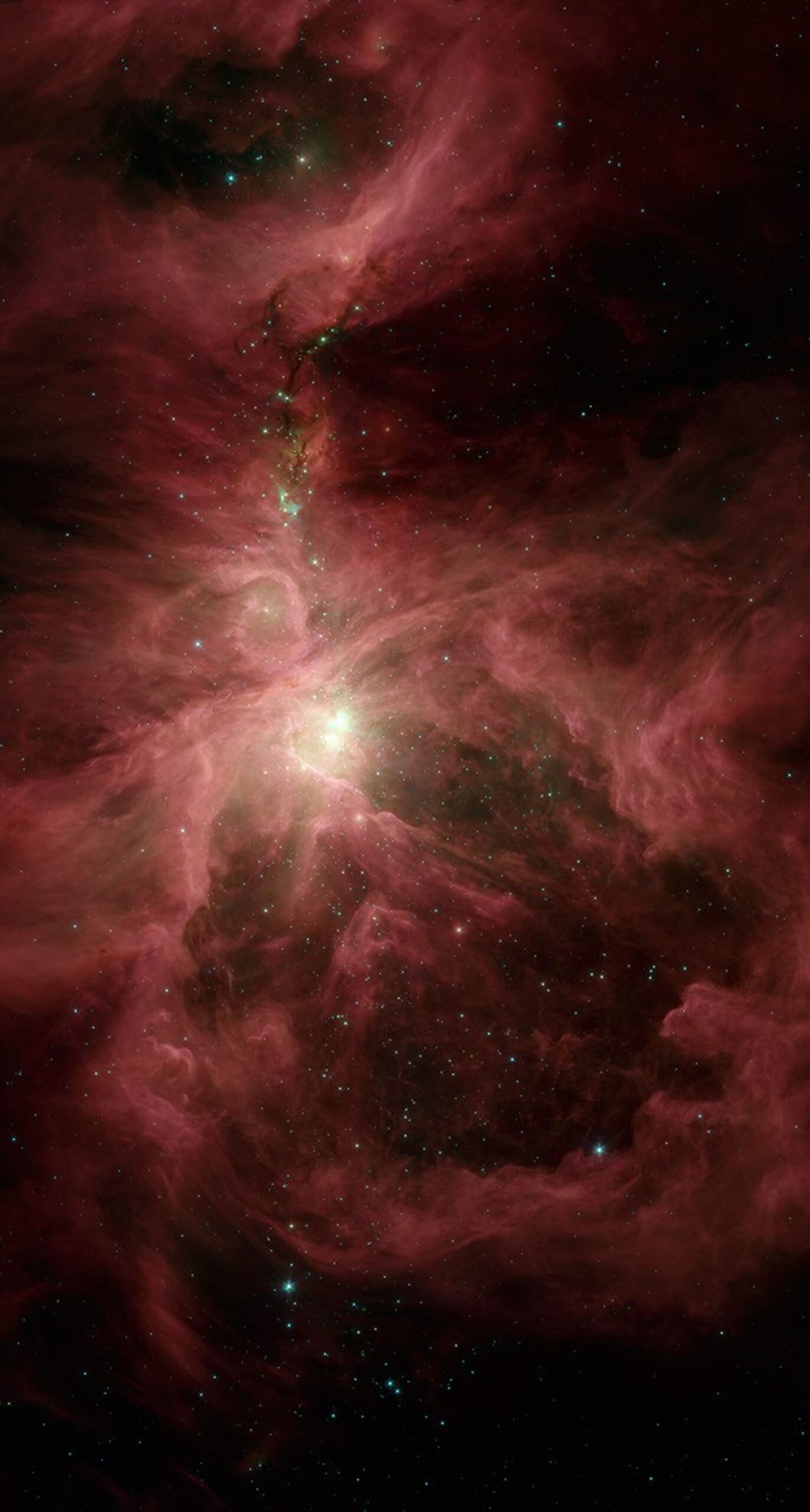
Nebulae are vast clouds of gas and dust in interstellar space. Some are regions where new stars are born, while others are formed from material shed by aging stars. Well-known examples include the Orion Nebula, the Ring Nebula and the Rosette Nebula.
Star Clusters
Star clusters are groups of stars that are linked by a common origin. The two main types are open clusters and globular clusters. Open clusters such as the Pleiades usually contain relatively young stars, while globular clusters are much older and can contain hundreds of thousands of stars.
Galaxies
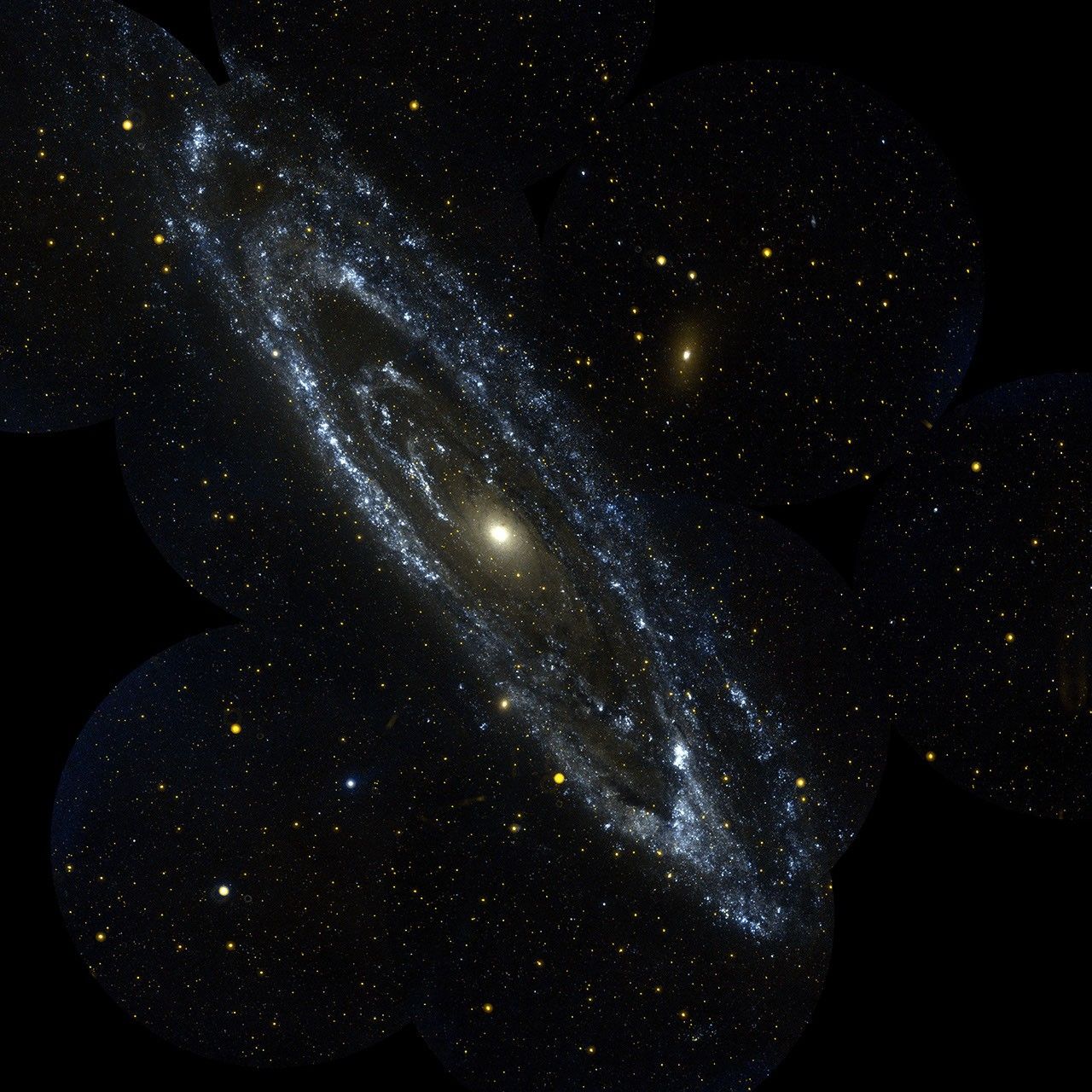
Galaxies are enormous systems made up of stars, gas, dust and dark matter. Our own Milky Way is just one of countless galaxies in the universe. Well-known observing targets include the Andromeda Galaxy as well as many spiral and elliptical galaxies that can be seen through telescopes or captured in astrophotography.
Deep-Sky Observation
For observing deep-sky objects, a dark sky with as little light pollution as possible is especially important. Many nebulae, star clusters and galaxies can already be found with binoculars or a small telescope. With larger apertures, suitable filters and a little observing experience, much more detail becomes visible.
Astrophotography of Deep-Sky Objects
Deep-sky astrophotography reveals faint objects that are often difficult to see visually through a telescope. With longer exposures, accurate tracking and careful image processing, structures in nebulae, star clusters and galaxies can be brought out in impressive detail. Location, equipment and precise planning all play an important role.
More About Deep Sky
Deep-sky observing rewards patience, good conditions and careful preparation. Which objects are visible depends strongly on the season, time of night, observing location, light pollution and the equipment being used. Some targets can be seen with the naked eye or binoculars, while others require a telescope, dark skies and steady atmospheric conditions.
Apparent brightness and apparent size also play an important role. A large but faint object can be more difficult to observe than a smaller but brighter one. In astrophotography, additional factors such as exposure time, tracking accuracy, focal length and image processing become especially important.
On Foto-Gorilla, you’ll gradually find detailed information about individual nebulae, star clusters and galaxies – including visibility, suitable equipment, the best observing times and photographic possibilities. This will help you choose the right deep-sky targets for your next clear night.
Faint deep-sky targets benefit from dark skies and good observing conditions. Explore the basics of astrophotography for imaging.
Nebulae, star clusters and galaxies
Deep sky: more than a faint patch of light.
Distinguishing nebulae
Emission nebulae glow because energetic radiation excites the gas. Reflection nebulae scatter light from nearby stars. Dark nebulae appear as dark regions against a brighter background.
Planetary nebulae are expelled envelopes of evolved stars; their name does not mean they contain planets. Supernova remnants are another kind of nebula target. These differences help you choose image scale, recording method and filters.
The Orion Nebula M42, Ring Nebula M57 and Rosette Nebula are examples with very different apparent sizes.
Discovering star clusters
Open clusters often spread their stars over a wide field. The Pleiades are particularly rewarding with binoculars or short focal lengths. A tight frame may cut off a large part of the cluster.
Globular clusters often resemble compact, grainy balls of light in small instruments. Resolving individual stars depends on aperture, magnification and sky conditions. A photograph offers a different view from the eyepiece.
Try the Pleiades M45, the Double Cluster in Perseus and globular cluster M13 as contrasting examples.
Observing galaxies
Galaxies are large stellar systems. Spiral galaxies often show arms and dust lanes in photographs; elliptical galaxies appear smoother, while irregular galaxies lack a pronounced regular shape.
The Andromeda Galaxy M31 is extended: its bright core may remain visible while the faint outer regions disappear in a bright sky. A large apparent diameter does not make the whole object easy to see.
M31, M81/M82 and M51 offer different subjects. Check field of view and season beforehand, and expect a different impression at the eyepiece from a long-exposure photograph.
Reading brightness correctly
Integrated brightness describes the total light from an object. When that light is spread over a large area, the object can still be difficult to detect. Surface brightness and contrast against the sky matter.
Compare brightness with apparent size. Moonlight and light pollution often affect diffuse nebulae and galaxies more strongly than compact, bright star clusters.
Making use of a clear night
Choose targets that climb reasonably high, rather than merely rise above the horizon. Transparency and limited moonlight help with faint extended objects. Steady air is especially important for small details or separating stars at high magnification.
Record the target, time, location and conditions. Comparing observations helps you recognise what a better night changes.
With a telescope or smart telescope
A conventional telescope provides a direct view through an eyepiece. A smart telescope collects and combines exposures to reveal faint structures on a screen. These are different observing experiences.
Check the field of view: large nebulae may require a mosaic, small galaxies a longer focal length. Filters are useful only when suited to the light emitted by the target; they do not replace a dark sky.